
How to Decorate a Coastal Home Without It Looking "Too Beachy"
There is a version of coastal decorating that feels timeless and refined. And there is a version that feels like a souvenir shop.
Most homeowners buying in Hilton Head or the Lowcountry want the former but are not always sure how to get there. The instinct to lean into seashells, anchor motifs, and turquoise everything is understandable. You are steps from the ocean. The lifestyle is part of the appeal. But the homes that photograph beautifully, hold their value, and feel genuinely luxurious are the ones that suggest the coast rather than announce it.
This guide walks through the principles and practical choices that separate elevated coastal design from coastal cliche, covering color, texture, furniture, and the details that pull a room together without tipping it into theme territory.
Start With a Neutral Foundation That Lets the Location Do the Work
The most common mistake in coastal decorating is trying too hard to reference the ocean indoors. The water is right outside. Your interiors do not need to repeat that message.
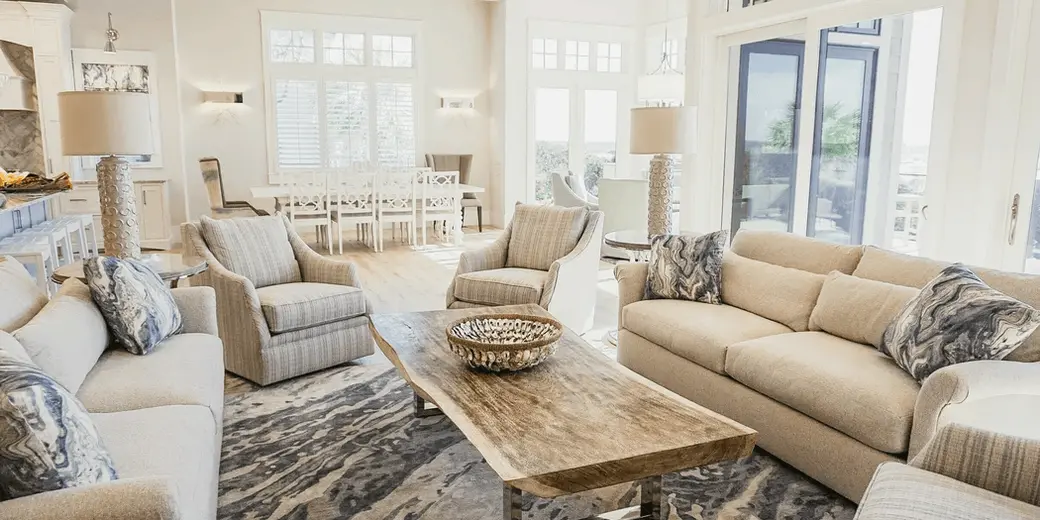
A refined coastal palette starts with a calm, layered neutral base and allows the natural light, the views, and the outdoor connection to carry the coastal feeling. Think warm whites, soft greiges, natural linen, and weathered wood tones rather than navy and coral.
Walls and Ceilings
White walls remain the most versatile foundation for a coastal home, but the shade matters. A warm white with a slightly creamy undertone reads as sophisticated and relaxed. A stark, cool white can feel clinical rather than coastal. For ceilings, consider a tongue-and-groove treatment in white or natural wood to add texture and architectural character without any obvious nautical reference.
Flooring
Wide-plank flooring in light oak, whitewashed wood, or large-format natural stone tiles ground the space beautifully. Both materials age gracefully in a coastal environment, handle humidity well, and feel intentional rather than decorative.
Choose Furniture and Textiles That Prioritize Texture Over Theme
Once your neutral foundation is in place, texture becomes your primary design tool. Coastal interiors that feel luxurious rely on layering natural materials rather than reaching for printed pillows featuring starfish or wave patterns.
Here is what works well in a Lowcountry coastal interior:
- Rattan, cane, and wicker used selectively, one statement chair or a pair of side tables, add a coastal reference that reads as curated rather than kitschy
- Linen and cotton slipcovers in natural or soft tones bring warmth and a relaxed elegance that suits the lifestyle perfectly
- Sisal or jute area rugs ground living spaces in natural material and work beautifully under darker wood furniture
- Weathered or cerused wood finishes on furniture carry the coastal aesthetic without any literal reference to the ocean
- Sheer linen window panels rather than heavy drapes keep the space light, airy, and connected to the outdoor environment
The test for any piece or textile is simple. Does it feel like something you would find in a well-traveled person's home, or does it feel like it was purchased at a beach gift shop? Trust that instinct.
Use Accents Intentionally and Sparingly
Accents are where coastal decorating most often goes wrong. A few well-chosen pieces create a sense of place. Too many create visual noise that cheapens the whole room.
Apply the same discipline here that you would to any luxury interior. Each accent should earn its place by being beautiful, interesting, or personally meaningful, not simply because it references the ocean.
Accents that work well in an elevated coastal home:
- Large-scale botanical or nature photography in simple frames, coastal landscapes, marsh scenes, or aerial shots of the island feel local without being literal
- Coral, driftwood, or sea glass displayed as singular objects rather than collections scattered across every surface
- Ceramic or glass vessels in muted ocean-adjacent tones, soft sage, slate blue, or warm sand, used in odd-numbered groupings
- One or two quality pieces of local art that reference the Lowcountry landscape or culture and tell a specific story about where you are
The restraint itself is what communicates luxury. A room with three perfectly chosen accents reads as far more refined than a room with thirty coastal-themed objects.
Thinking About Listing Your Coastal Home?
How a home is decorated significantly influences how buyers experience it during showings and how it presents in photography. Homes that feel elevated and intentional attract stronger offers from buyers who can see themselves living there.
If you are considering listing your Hilton Head or Lowcountry property and want honest guidance on presentation, staging, and positioning, Loni is here to help. Schedule a private consultation and walk through your home with someone who knows exactly what today's buyers are looking for.
Recent Posts